Orbit: Learn the game behind the glass
Concept Case Study
Pinball has survived for decades without ever explaining itself. Orbit explores how a progressive, game-inspired learning model could help players understand core mechanics, build real skills, and rethink how pinball is taught.
Context
Mission:
Make pinball more accessible by introducing a modern, digital learning layer that supports real-world play and helps new players understand how the game actually works.
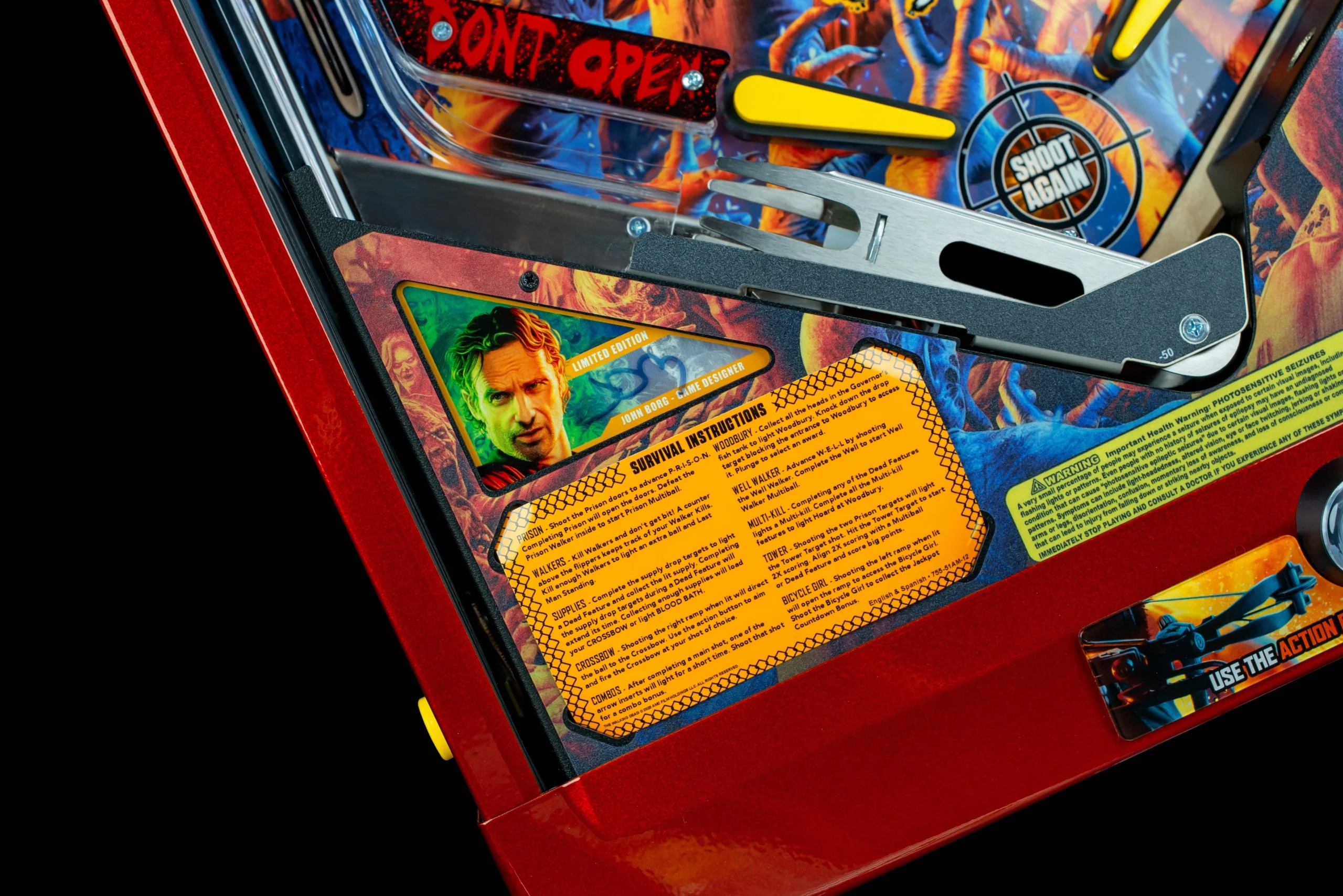
Pinball is one of the longest-surviving gaming devices in U.S. history, yet most modern machines provide little structured guidance. New players typically learn through trial and error, instruction cards, or word-of-mouth. As a result, many never discover the deeper objectives, layered modes, or strategic mechanics built into the game.
Orbit explores how a game-inspired learning model could introduce structured skill development to pinball — helping players build real understanding while giving manufacturers new ways to engage emerging audiences.
Key issues:
- New players struggle to understand objectives, modes, and scoring systems
- Discovery relies heavily on trial and error, limiting long-term engagement
- Instruction cards and manuals are static, overlooked, or disconnected from play
- Manufacturers lack a digital layer that supports learning beyond the machine
Design Goal:
Create a structured digital experience that teaches core mechanics, reinforces fundamentals through guided practice, and motivates continued development using game-based progression systems.
My Role
Lead Product Designer / UX Strategist / Visual Designer
I conceived Orbit as a self-initiated product exploration to rethink how pinball could support structured skill development. My responsibilities included:
- Designing the core learning framework (Lesson → Drill → Real-World Play)
- Defining the progression model and feedback loops
- Crafting the visual system, motion language, and interface components
- Integrating game mechanics to reinforce engagement and retention
- Exploring long-term scalability, including potential manufacturer integration
Process & Design

Problem
New players often approach a pinball machine without understanding its objectives, hidden modes, or core mechanics. While depth is part of the appeal, the lack of structured guidance makes that depth difficult to access. Learning is left to trial and error, instruction cards, or word-of-mouth — limiting engagement and long-term growth.
Orbit frames this challenge simply: how might we make learning pinball more accessible, engaging, and effective?
Player Confusion
Beginners struggle to understand scoring, objectives, and mode interactions, leading to repeated failure and discouragement.
Learning by Trial and Error
Without structured guidance, players often rely on guesswork, which slows skill acquisition and reduces enjoyment.
Manufacturer Challenges
Pinball makers provide little guidance for new players; static manuals and instruction cards are often overlooked or inaccessible, making it harder for players to understand machines and limiting long-term engagement.
Digital Opportunity
By leveraging a structured learning model, gamification, and interactive practice, Orbit provides an environment where mistakes become learning opportunities rather than frustration, bridging the gap between new players and real-world machines.
By understanding these pain points, Orbit frames the opportunity: structured lessons, targeted practice drills, and real-world reinforcement can transform how beginners approach pinball, making learning intuitive, engaging, and confidence-building.

Lesson → Drill → Real-World Play
New pinball players often struggle because rules are hidden, objectives aren’t explained, and machines offer no guidance. Orbit addresses this by structuring learning into a loop of lessons, drills, and real-world practice.
Lessons
Breaks down rules into digestible, actionable pieces. Each lesson explains “what to do and why,” helping new players grasp core mechanics without feeling overwhelmed.
Drills
Interactive exercises simulate specific skills—flipper traps, target recognition, reading ball speed, evaluating danger—letting players practice safely in a digital environment. Feedback is immediate, so mistakes reinforce skill-building instead of frustration.
Real-World Practice
Optionally integrates with physical machines, allowing players to validate skills, earn XP, and unlock bonuses. This creates a tangible link between digital learning and real-world play.
This loop reinforces learning through repetition and progression: lessons build knowledge, drills build competence, and real-world practice builds confidence. Gamification elements like streaks, badges, and visible progress maintain engagement and motivate continued improvement..

Visual / UI Direction
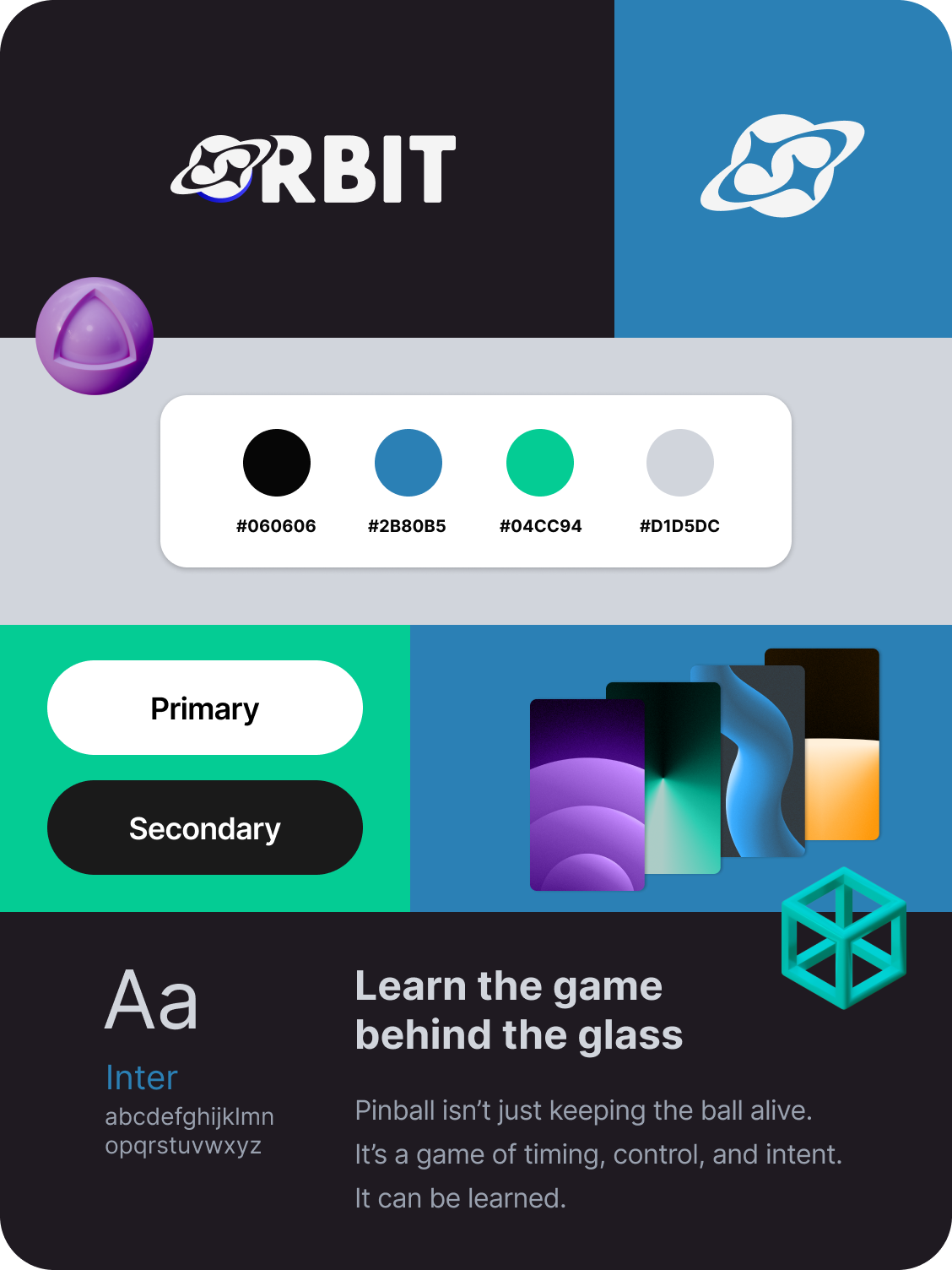
A visual direction grounded in pinball physics, motion, and restraint.
Orbit’s visual system draws from the physical qualities of pinball such as glass, light, motion, and depth, while remaining minimal and instructional. The interface avoids mascots or literal theming and instead uses abstract forms and motion to communicate timing, trajectories, and risk.
Visual hierarchy supports learning by directing attention where it matters most. High-contrast elements focus on the ball, flippers, and targets, while secondary information recedes into the background. Subtle motion, glow, and parallax help players read ball speed and danger without relying on text-heavy explanations. Texture and grain add tactility, grounding the experience in the physical nature of pinball while keeping the UI clean and modern.

Player Experience
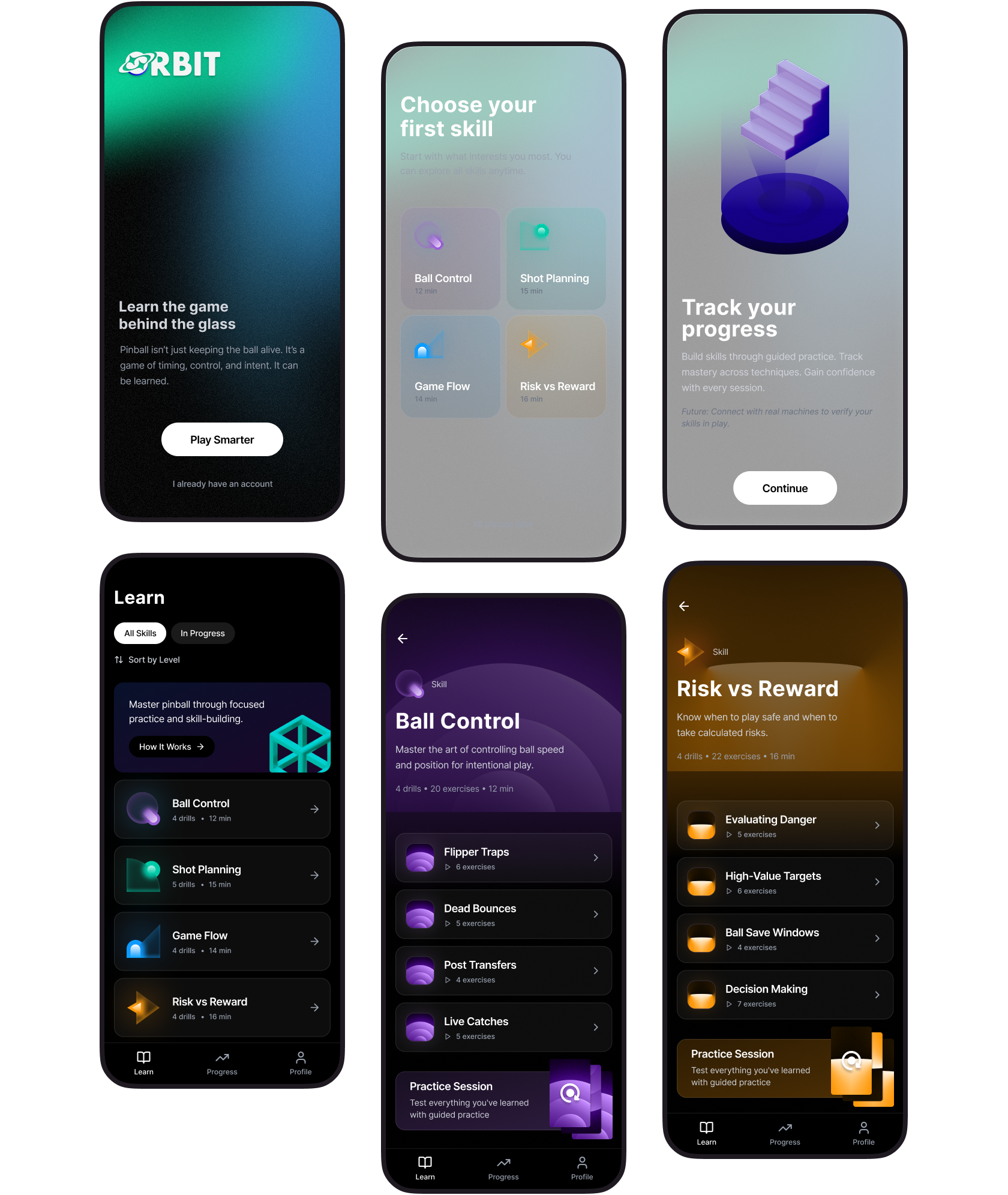
Orbit’s interactive screens guide players from learning to mastery, making skill-building clear, engaging, and rewarding.
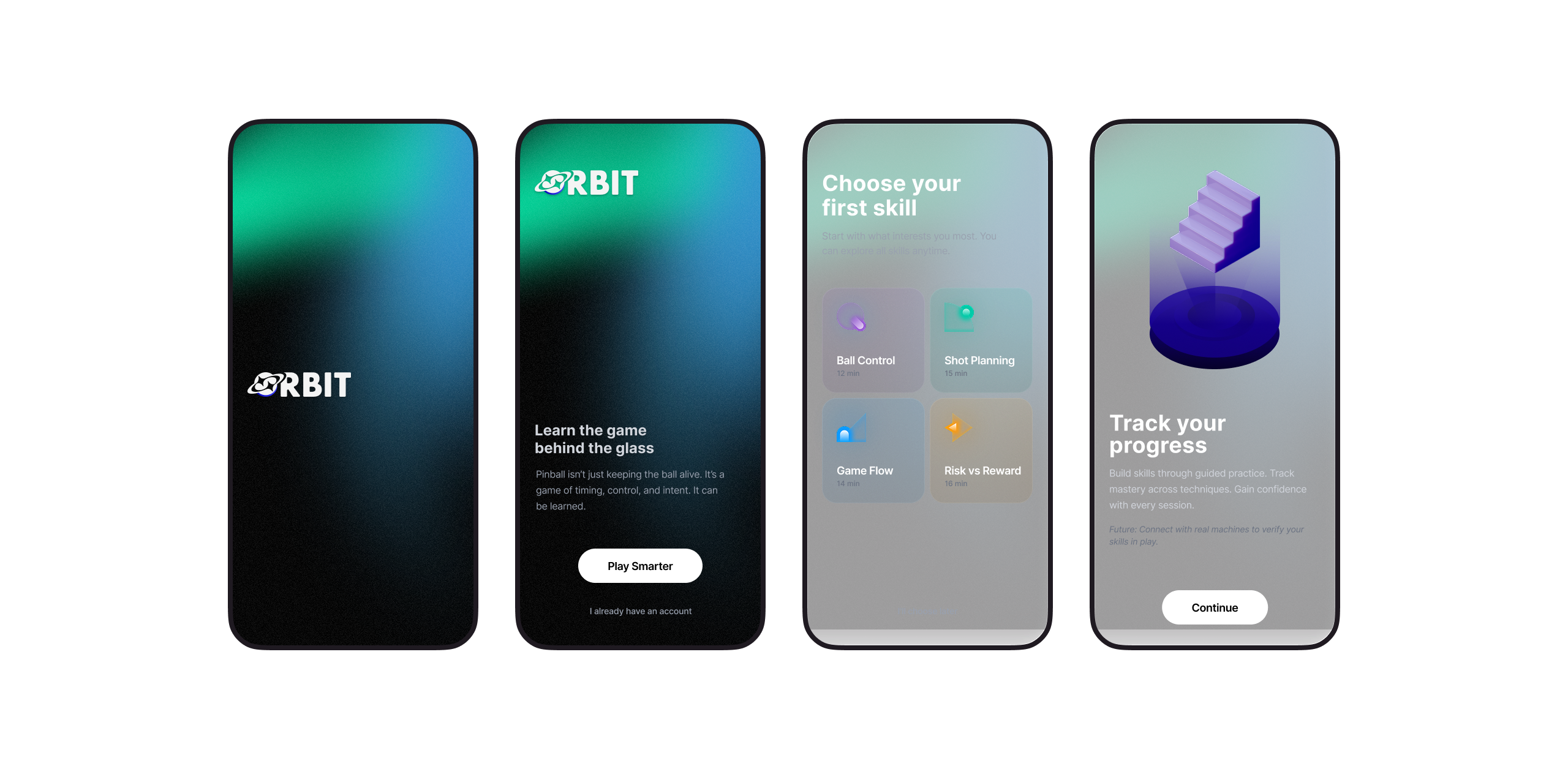
Entry & Orientation
Introduces players to the app and its learning philosophy. Minimal, focused visuals explain the purpose of lessons and drills, letting players start with confidence.
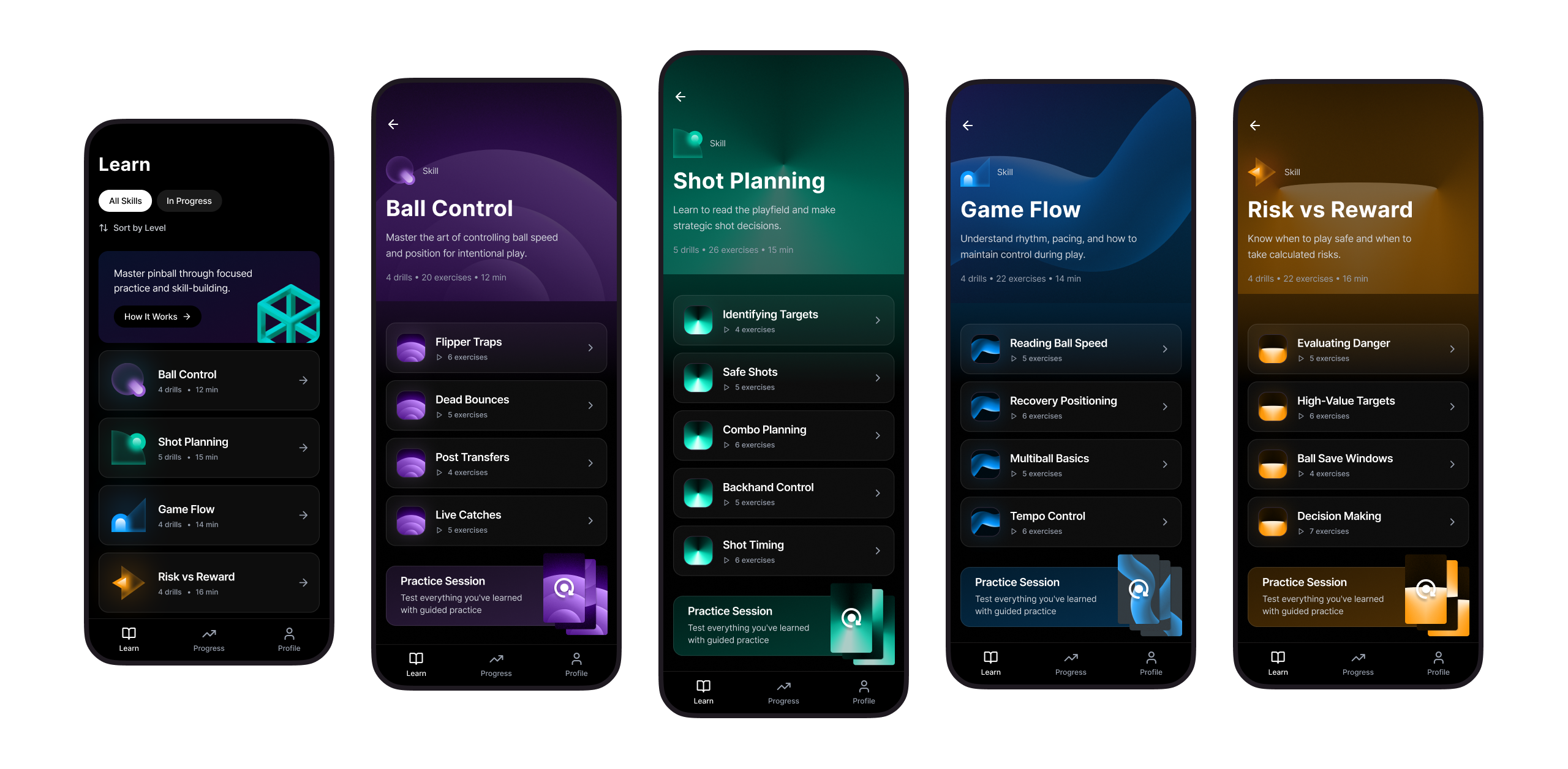
Skill Selection
Players choose which skills to practice. Abstract, approachable tiles communicate categories like ball control, shot planning, game flow, and risk evaluation.
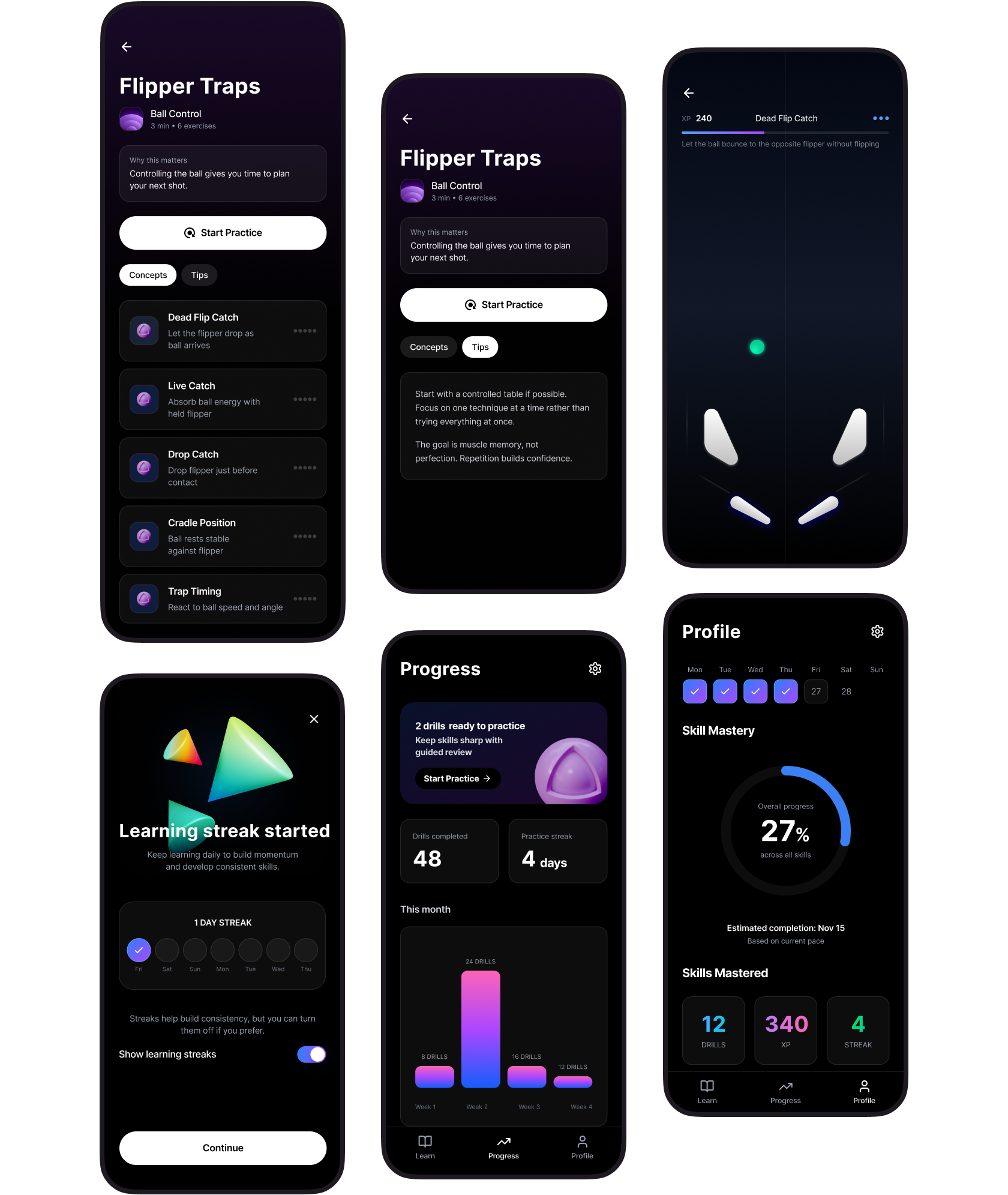
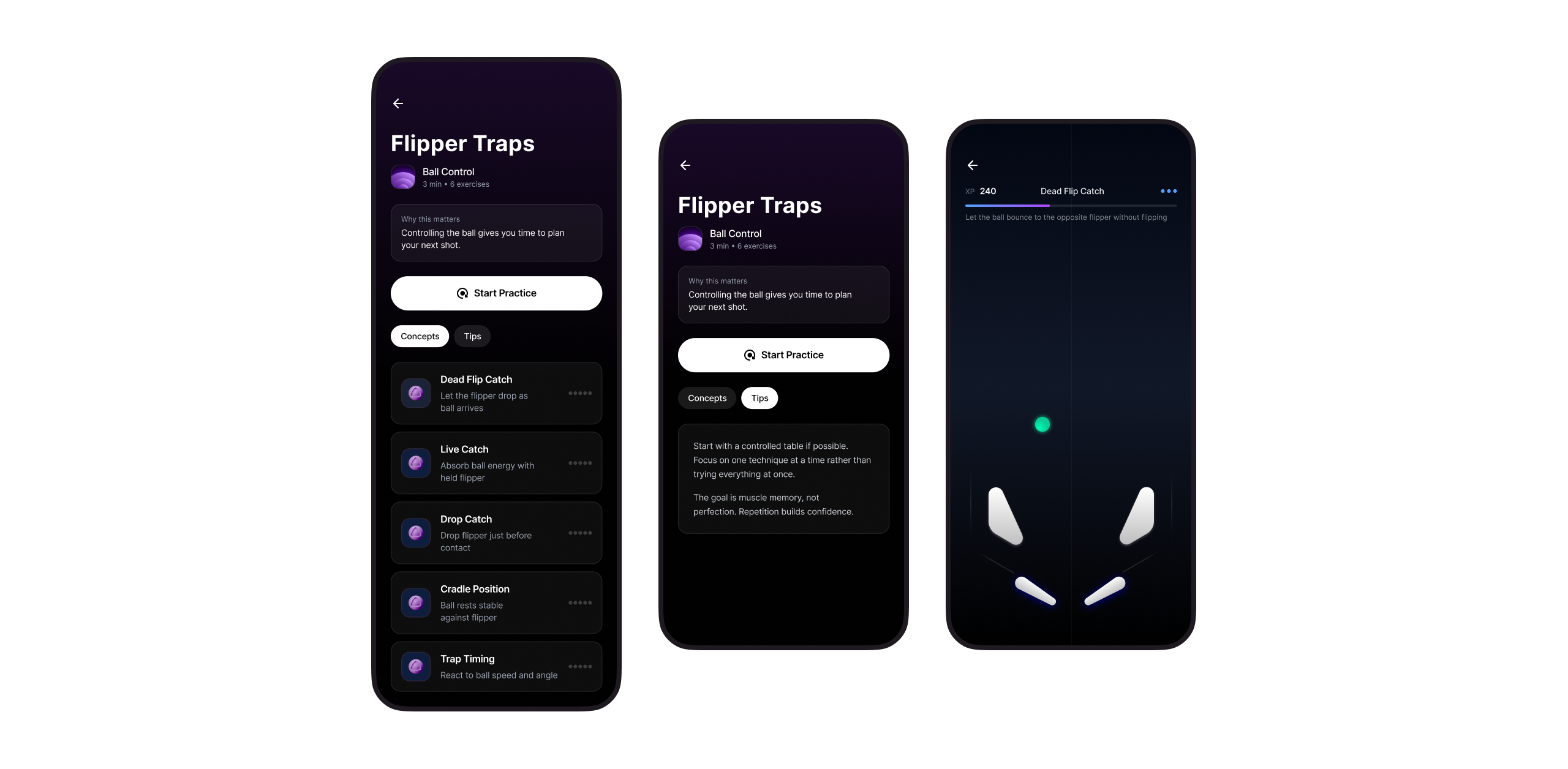
Lesson Detail
Each lesson delivers focused guidance, breaking mechanics into digestible, actionable pieces. Visual cues and motion reinforce understanding without relying on text-heavy explanations.
Practice / Drill
Interactive exercises let players safely practice specific skills in a digital environment. Immediate feedback highlights mistakes and supports improvement. Exercises include flipper traps, target recognition, reading ball speed, and evaluating danger.
Progress & Vision
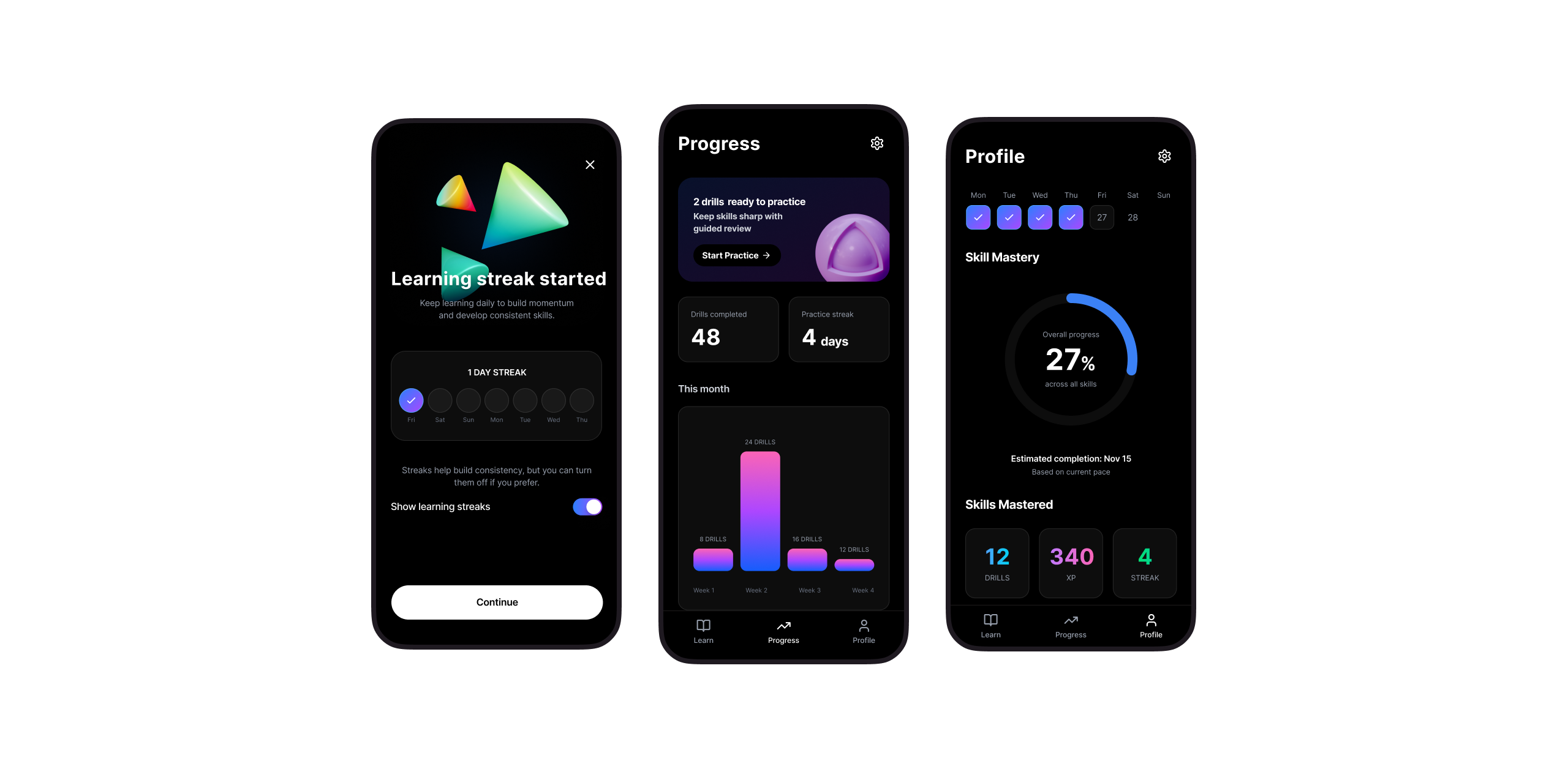
Tracks player growth and mastery. XP, streaks, and optional real-world verification create a sense of progression and link digital learning to physical play.
This flow demonstrates how Orbit transforms onboarding into a structured, engaging, and measurable experience. Players move seamlessly from orientation to mastery while the design emphasizes clarity, progression, and feedback. View the interactive prototype.

Scaling Learning & Engagement
Orbit is designed to grow with players and manufacturers, blending gamified progression with future-ready features.
XP & Streaks
Players earn XP by completing drills and lessons. Streaks track consistent play, showing progress and encouraging regular practice without interrupting learning.

Badges & Unlocks
Achievements mark skill milestones and unlock new content as players advance. These rewards recognize mastery and give players clear goals without relying on competitive pressure.

Real-World Integration
Future iterations could let players validate skills on physical machines, linking digital progress to gameplay, reinforcing learning, and rewarding mastery across both environments.

Future Vision
Concepts like QR codes, API integrations, and manufacturer platform support represent ways Orbit could grow in the future, extending engagement across digital and physical play.

Orbit is a structured skill development platform for pinball, giving players a clear, engaging way to learn core mechanics. Future iterations could explore connections with manufacturers to deliver game-specific guidance, integrate digital practice modes, or provide structured tutorials tied to individual machines. Pinball has depth. Pinball lacks explanation. Orbit provides the missing learning layer.
Impact

Designing a learning layer for a timeless game
Orbit shows how a structured, gamified approach can help players develop core pinball skills and understanding, while illustrating how digital tools could extend learning in the future.
Key Takeaways
- Progressive Learning: Breaking rules and mechanics into digestible lessons lets players build knowledge without feeling overwhelmed.
- Skill Transfer: Drills and practice simulations bridge digital and physical play, showing how digital experiences can support real-world skill development.
- Engagement Through Gamification: Visible progress, XP, and streaks encourage repeated practice and foster intrinsic motivation.
- Strategic Growth: Conceptual ideas like QR codes, APIs, and manufacturer connections show potential ways the platform could expand and scale.
- Abstract Visual Communication: Motion, trajectories, and visual hierarchy teach subtly, without heavy text or literal theming.
Together, these elements illustrate a holistic approach to structured skill development, highlighting how design, strategy, and experience converge to create engaging and educational player experiences.